AI-powered expense tracking. See where your money went and what’s left for today.
Receipts drift from left to right behind a phone running Riffl and come out the other side as categorised records: store receipts, bank transfers, online orders and subscription invoices, in naira, dollars and pounds. Each keeps its merchant, total, currency, date and Riffl category. The phone shows Riffl's home screen, spending and income in turn.
Capture & review
Keep the receipt.
Lose the typing.
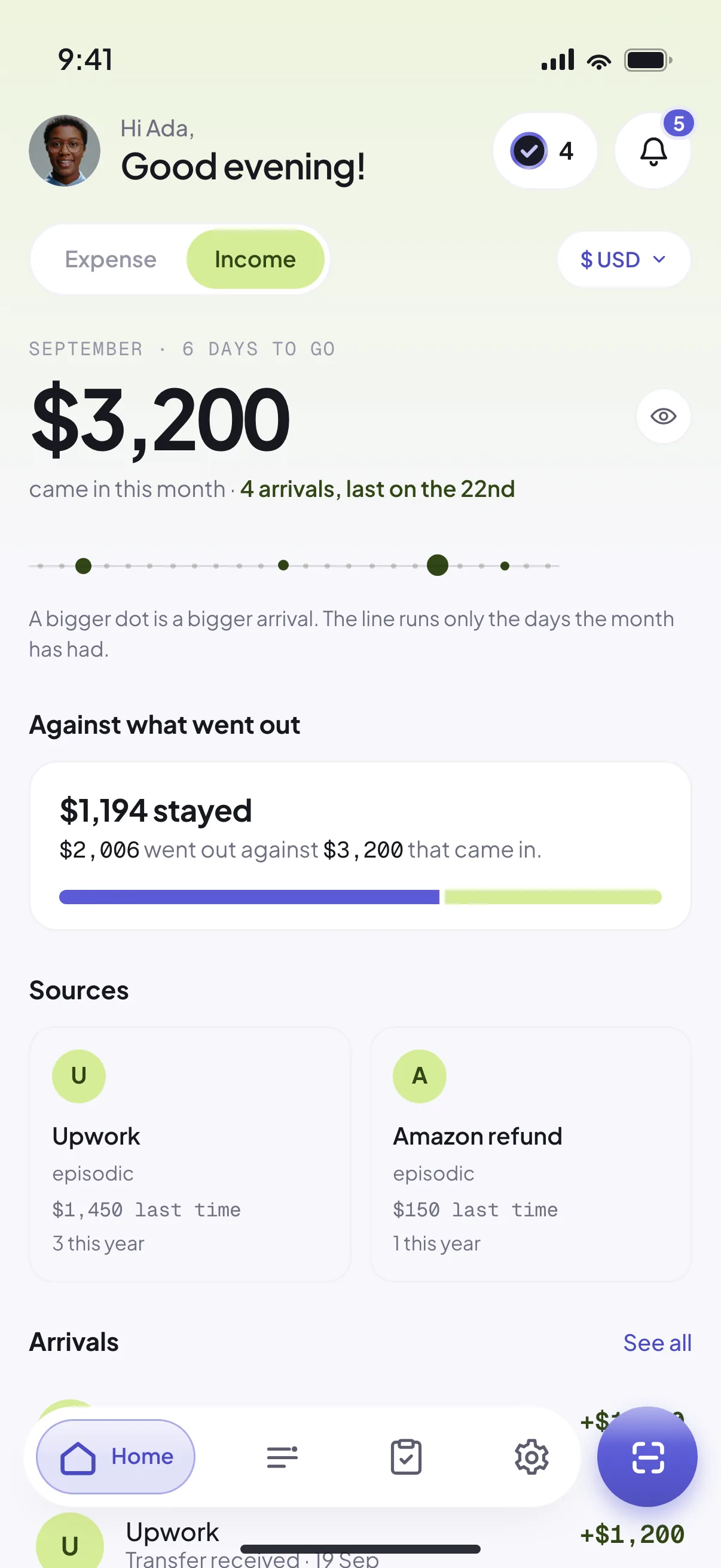
One receipt, from the scan button to your book, exactly as the app does it.
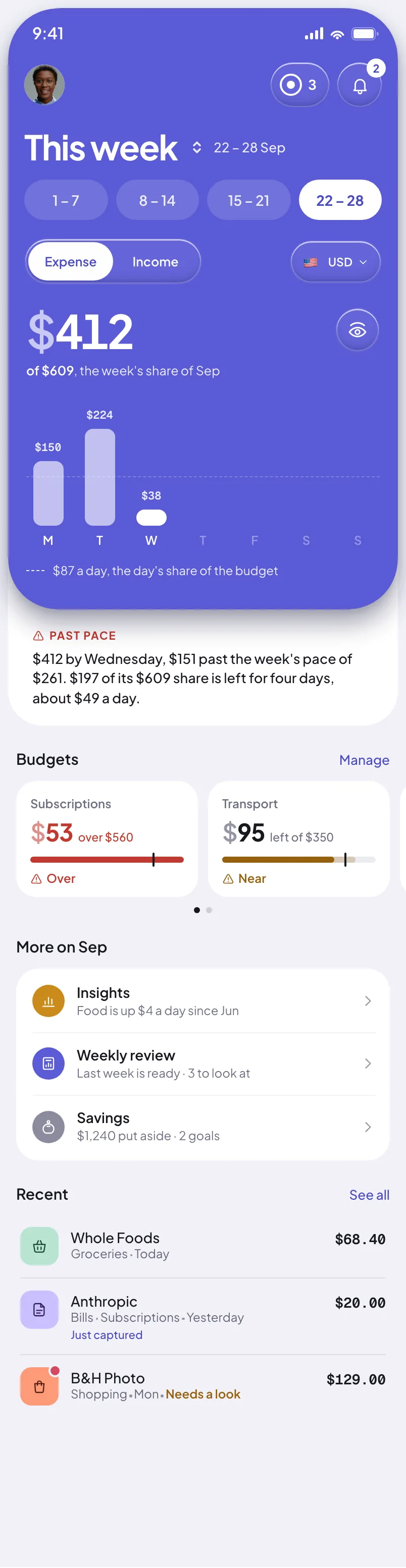


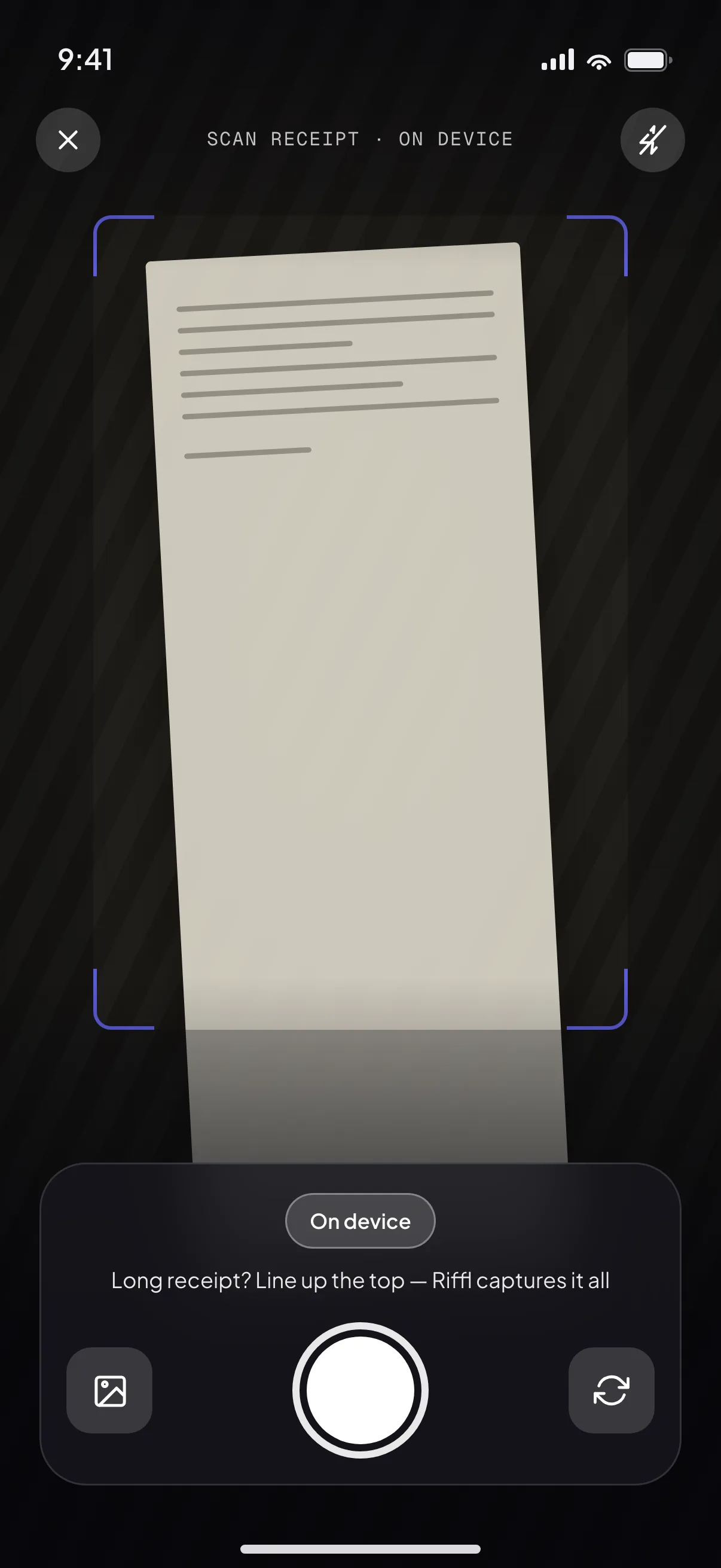
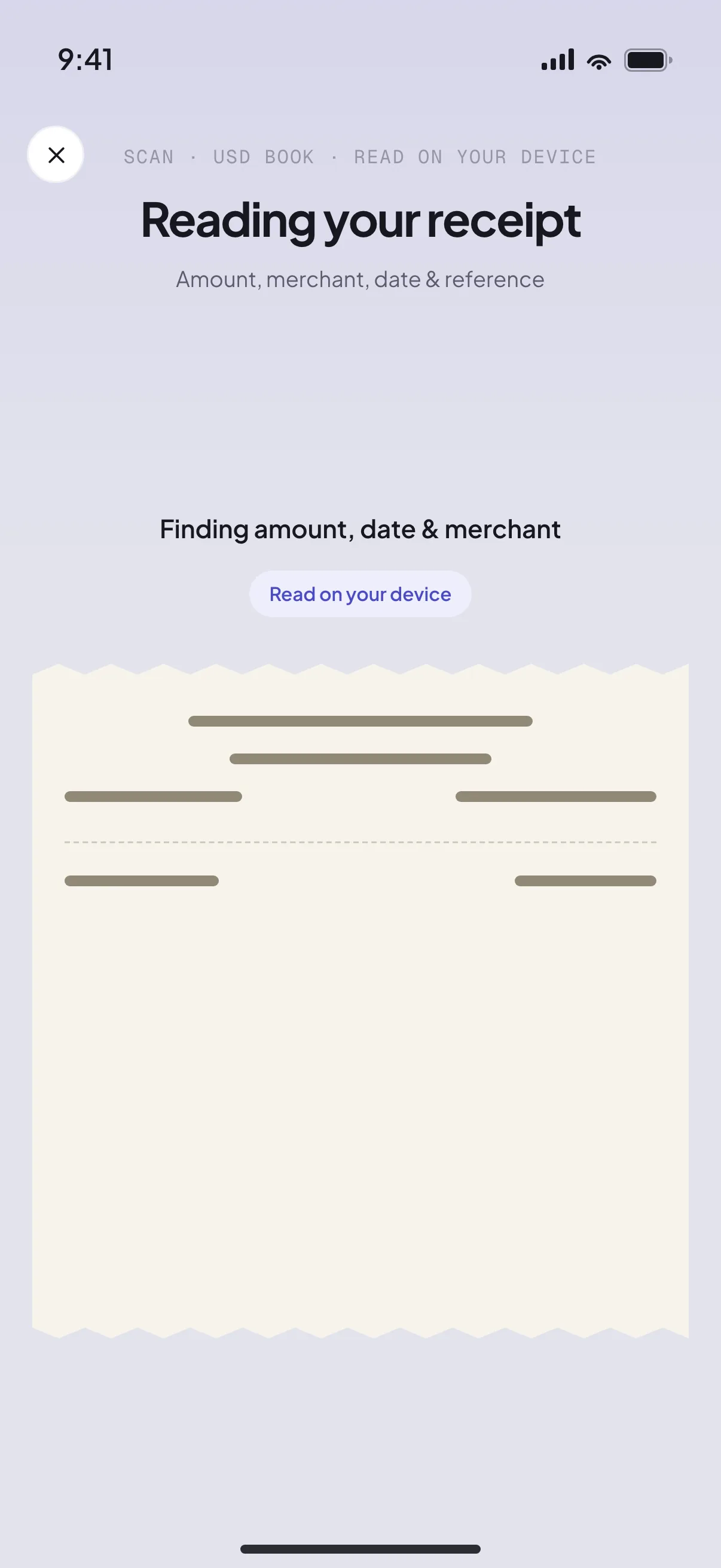
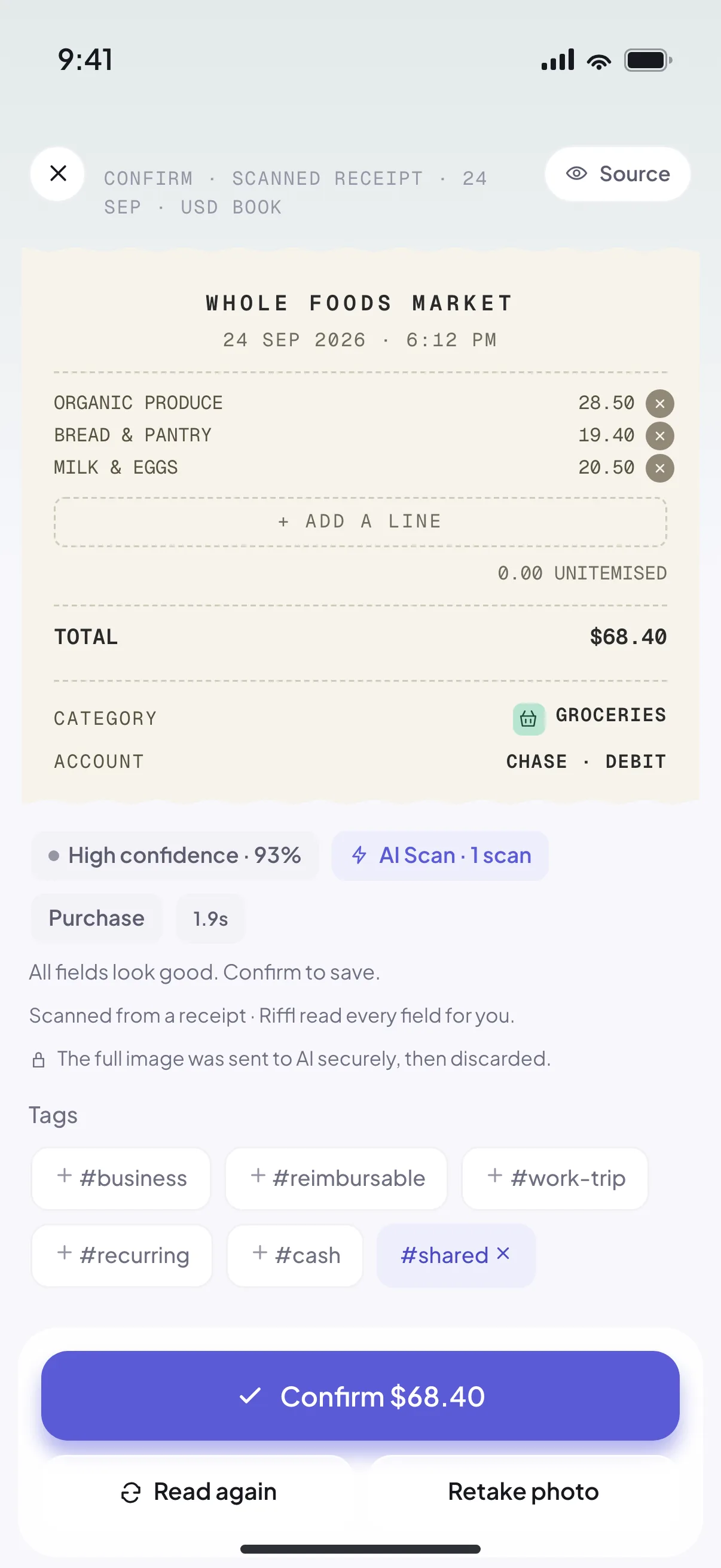
The phone plays the flow: from Home, the scan button opens a menu with Receipt and Manual. Receipt opens the camera, which frames a long paper receipt. Riffl reads the amount, merchant, date and reference. The confirm screen shows a Whole Foods Market receipt, editable fields and a Save button. The final screen shows the Recent records list on Home.
Multi-currency
Every currency,
its own book.
Naira, dollars, pounds, euros, and any other currency you use. Each keeps its own income, spending and budgets, never blended into one estimate.
- NGN
- USD
- GBP
- EUR
- CAD
- GHS
- KES
- ZAR
- AED
- INR
- AUD
- EGP
- BRL
- SAR
- PHP
- ARS
- JPY
- KWD
From the maker
I kept throwing my receipts away.
I wanted something simpler: snap the receipt or the bank alert, and actually see my weekly and monthly spend, clearly enough to budget and rein it in.
Olamide Agboola Maker of Riffl · Lagos
From a tester
- Capture
- No wrong categorising
- On my phone
- No lagging
- Still using it?
- Yes
“Riffl has helped me to look into my finances more. At first I thought I don’t need it, but it has proven me wrong.”
Budgets & savings
Make room for
what matters.

Know when to ease back.
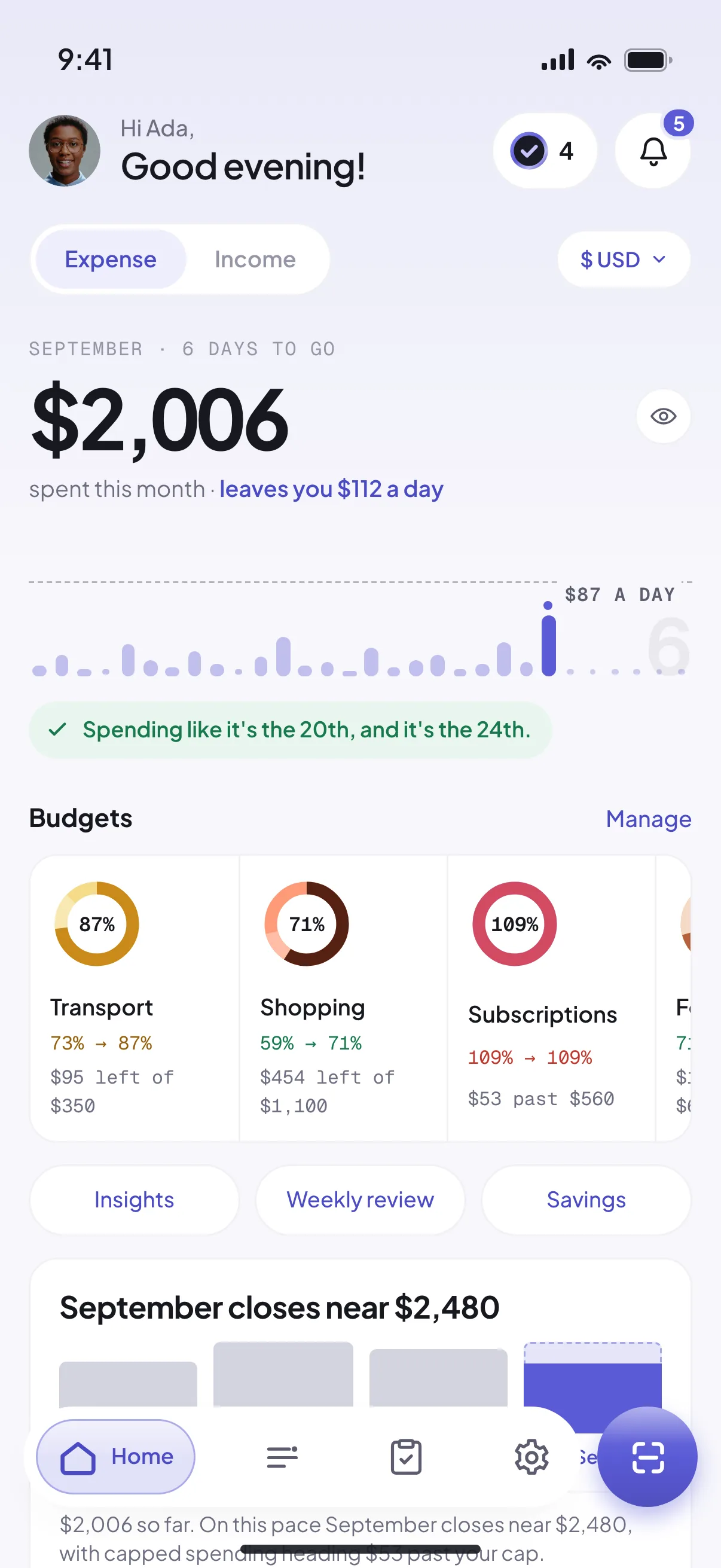
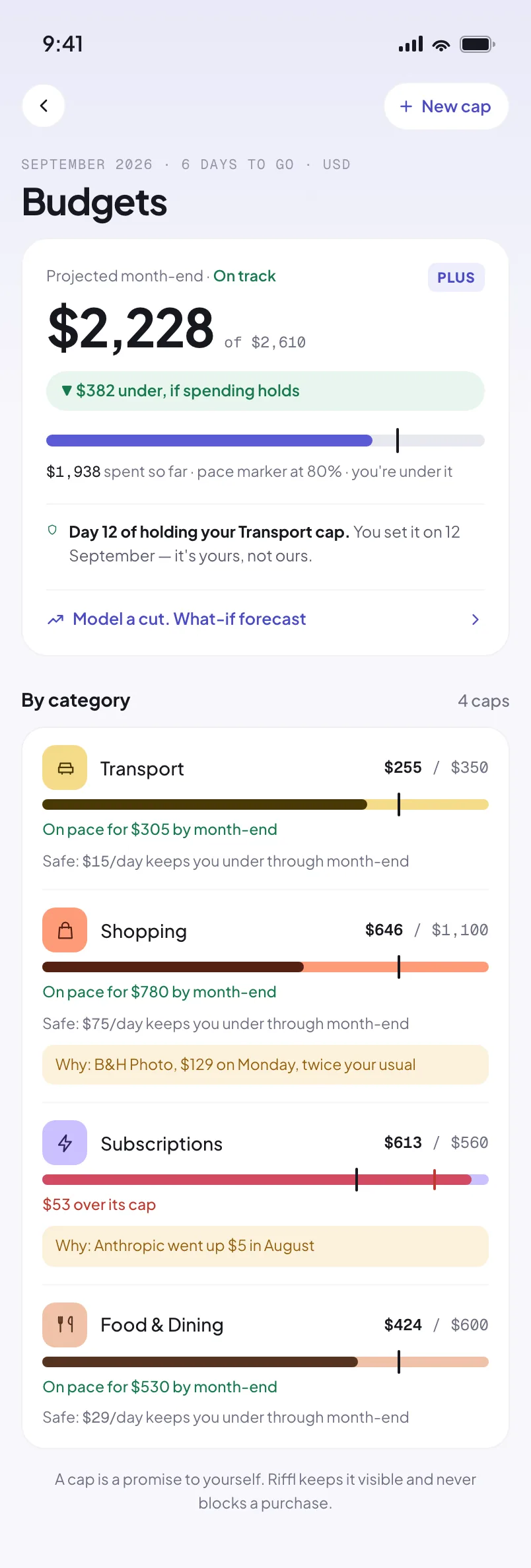
Your budget shows what is left and where the month is likely to end.

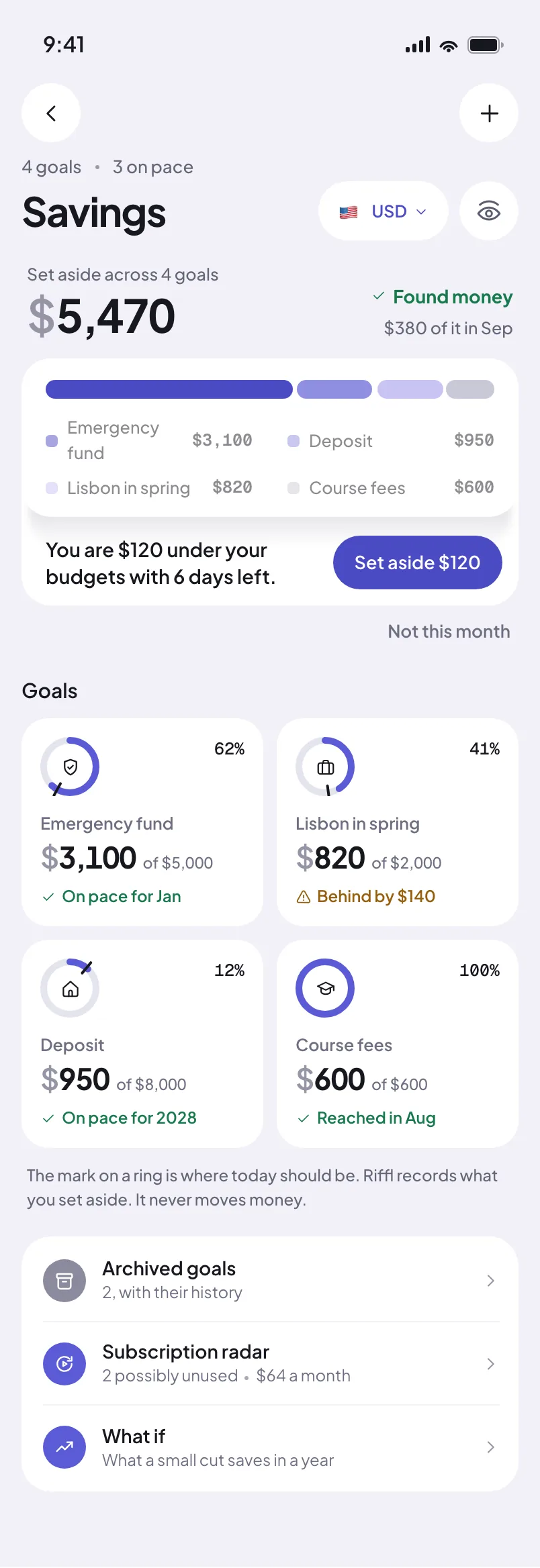
Give what’s left a purpose.
Set unspent money aside for a trip, a buffer or a place of your own. Track your progress toward the goal.
For life beyond
the numbers.
Plans with friends. A place of your own.
A little less worry about the end of the month.

No bank connection.No bank passwords. You choose the records Riffl reads.
Kept on your phone.Your records live locally. App lock and encrypted backup help you protect them.
A clear choice about AI.AI reading sends your chosen capture for extraction. On-device reading and manual entry are available too.
Is Riffl free during early access?
Yes. The app’s plan features are open during early access. AI reads have a scan allowance; manual entry and on-device reading are also available.
Do I need to connect my bank?
No bank login or BVN is needed. Scan a receipt, import a screenshot or statement, or add a record by hand. You review the details before they enter your books.
Can I track dollars and naira?
Yes. Riffl keeps each currency in its own book, with separate income, spending and budgets. It never blends them into an estimated total.
What can Riffl capture automatically?
On supported Android devices, you can enable bank-alert capture and review the alerts in your inbox. On iPhone, use receipt scans, screenshots, statement imports or manual entry.
Does it work offline?
Your records, editing and spending reviews work on your phone. AI reading needs a connection; on-device reading and manual entry are available offline.
How soon do insights appear?
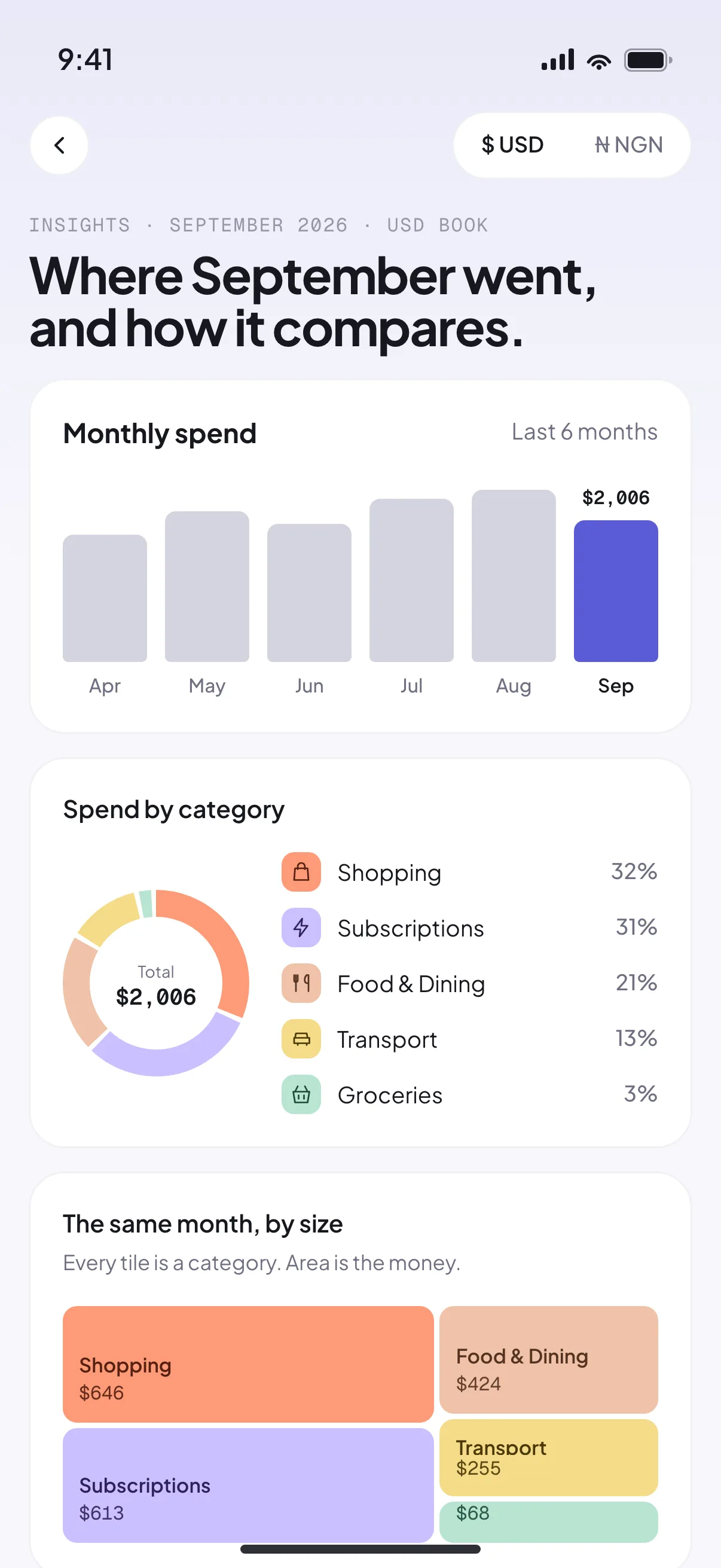
A saved record appears straight away. Importing a statement can add history sooner. Subscription detection needs repeat charges on a steady rhythm, and basket comparisons need repeat purchases.
Can I try a what-if?
Choose a category and a smaller spending level. Riffl estimates what that change could save over a year, based on your current month.
Can I keep track of money owed?
Record what you lent, what you borrowed, and repayments. Keep money that is coming back separate from everyday spending.
Can I see what I send home?
Track support for your household and extended family, with a history of the people and purposes behind your transfers.
Can I review, reimburse and export?
Look back by week, month or year. Tag reimbursable expenses and export PDF or CSV records when you need to share them.
Make today count.
Make a little more sense
of your money.
Your next receipt is a good place to start. Start tracking your expense now